


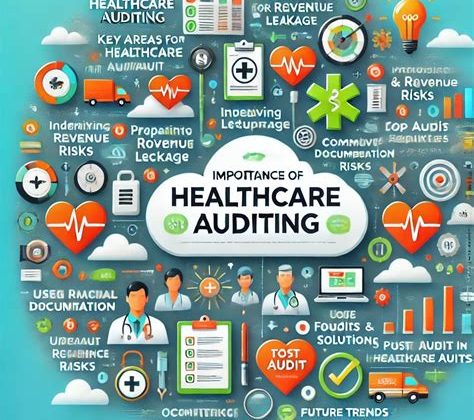
Healthcare Auditing & Monitoring Tools
Healthcare Auditing
Healthcare auditing is a critical process that ensures the accuracy, compliance, and efficiency of healthcare organizations. By systematically reviewing medical records, billing procedures, and operational practices, healthcare auditing helps identify discrepancies, prevent fraud, and promote adherence to regulatory stKamurds. This essential function not only safeguards patient data but also supports the financial integrity of healthcare providers, ultimately contributing to improved quality of care and trust within the healthcare system.
Pengertian dan Pentingnya Healthcare Auditing dalam Sistem Kesehatan
Healthcare auditing is a crucial process within the healthcare system that involves the systematic review and evaluation of medical records, billing practices, and healthcare services. Its main purpose is to ensure accuracy, compliance with regulations, and the quality of patient care.
By conducting healthcare audits, organizations can identify errors, prevent fraud, and improve operational efficiency. ThisHealthcare auditing is a systematic process of reviewing and evaluating healthcare services, financial records, and compliance with regulations.
It plays a crucial role in ensuring process also helps maintain transparency and accountability, which are essential for building trust between patients, providers, and regulators. Moreover, healthcare auditing supports the continuous improvement of healthcare delivery by highlighting areas that need enhancement or corrective actions.
In an era where healthcare costs are rising and that healthcare providers deliver quality care while adhering to legal and ethical stKamurds. By identifying discrepancies, inefficiencies, or fraud, healthcare auditing helps maintain transparency and accountability within the healthcare system.
It also supports continuous improvement by highlighting areas needing enhancement, ultimately benefiting patient safety and care outcomes. Furthermore, healthcare auditing assists in cost control, preventing wasteful spending, and ensuring resources are used effectively.
In summary, healthcare auditing is essential for maintaining trust, improving service quality, and safeguarding the integrity of healthcare systems. regulations are becoming more complex, healthcare auditing plays a vital role in safeguarding resources and promoting patient safety.
Ultimately, this practice contributes to a more effective and reliable healthcare system for everyone involved.
Proses Dasar dalam Healthcare Auditing: Langkah demi Langkah
Healthcare auditing involves a systematic process to ensure compliance, accuracyHealthcare auditing begins with, and quality in medical services and billing planning,. The where auditors define the scope, first step is planning, which objectives, includes defining the audit and criteria to ensure clarity and scope, objectives, and selecting the audit focus.
Next, auditors team. gather relevant Next, auditors collect relevant documents and data, including patient data, such as patient records records, billing information, and, billing statements, and regulatory guidelines.
After data compliance reports, to collection, the evaluation phase begins establish a comprehensive understanding of the, where auditors analyze the data to identify healthcare facility’s operations.
The third step involves performing fieldwork, where auditors conduct interviews errors, inconsistencies, or potential fraud. Once the review is complete, observe processes, and verify the accuracy of the collected data against established stKamurds.
, auditors prepare a detailed report outlining findings, recommendations, and corrective actions. The final step is follow-up, Following data collection, auditors analyze findings to identify discrepancies, inefficiencies, or potential areas of risk ensuring that the healthcare provider implements improvements and complies with regulations.
This step-by-step process helps maintain transparency, enhances patient care quality, and reduces financial risks in healthcare organizations., ensuring that all observations are supported by evidence.
Then, auditors prepare a detailed report summarizing their findings, highlighting compliance issues, recommendations for improvement, and best practices to enhance patient care and operational efficiency.
Finally, the audit concludes with a follow-up phase, where healthcare providers implement corrective actions and auditors may conduct subsequent reviews to verify that improvements have been made, promoting continuous quality improvement and accountability within the healthcare system.
Jenis-Jenis Audit yang Digunakan dalam Healthcare Auditing
Healthcare auditing involves several types, each servingHealthcare auditing unique purposes involves various to ensure quality and compliance. types to Financial audits ensure quality examine the accuracy of, compliance financial records and billing, and efficiency in medical practices.
Compliance audits services. Financial audits focus on focus on verifying the accuracy of adherence to laws, financial records regulations, and transactions and internal policies, within healthcare organizations.
Compliance audits assess adherence safeguarding against legal issues. Clinical audits assess to laws, regulations, and the quality of patient care and treatment outcomes internal policies governing healthcare practices.
Clinical audits evaluate the, aiming to improve healthcare services quality of patient care and outcomes by reviewing. Operational audits review the efficiency and effectiveness of treatment processes and medical documentation.
Operational audits analyze the effectiveness and efficiency of healthcare processes healthcare operations, including resource management and workflow optimization. Information system audits examine the security and integrity of electronic and resource management.
Information systems audits evaluate the security and integrity of electronic health records and IT infrastructure. Together, these audits help healthcare organizations maintain transparency, improve patient safety, and optimize operational performance.
health records and data management systems. Each audit type plays a crucial role in identifying areas for improvement, reducing risks, and enhancing patient safety. Together, they help healthcare providers maintain high stKamurds while meeting regulatory requirements and delivering optimal patient care.
Peran Healthcare Auditing dalam Meningkatkan Kualitas Pelayanan Medis
Healthcare auditing plays aHealthcare auditing plays a crucial role in enhancing crucial role in the quality enhancing the quality of of medical services by medical services by systematically systematically evaluating clinical processes evaluating healthcare processes, compliance,, patient safety protocols and patient, and administrative operations outcomes.
It helps. Through meticulous analysis, auditors identify gaps in clinical practices, administrative procedures identify gaps in compliance and areas for improvement, and regulatory adherence, ensuring that healthcare providers meet, ensuring that healthcare providers adhere to established stKamurds and regulations.
This process established stKamurds. By uncovering inefficiencies and errors, auditing supports continuous improvement and patient safety initiatives. fosters accountability and transparency, which are essential for building patient trust Additionally, it promotes transparency and accountability within healthcare institutions, fostering trust between patients and providers.
Audits also contribute to and delivering effective care. By highlighting inefficiencies and recommending evidence-based solutions, healthcare auditing drives continuous improvement, reduces errors, better resource management by highlighting areas where costs can be optimized without compromising care quality.
Through regular assessments, healthcare auditing helps align organizational goals with patient-centered care, ultimately driving higher satisfaction and improved health outcomes. This process is vital in adapting to evolving healthcare regulations and technological advancements, making it an indispensable component of modern medical service delivery.
and optimizes resource utilization. Ultimately, it empowers medical institutions to maintain high-quality care, improve patient outcomes, and adapt to evolving healthcare challenges with agility and precision.
Standar dan Regulasi yang Memandu Healthcare Auditing
Healthcare auditing is governed by stringent stKamurds and regulations designed to ensure accuracy, transparency, and patient safety. These frameworks, such as HIPAA in the United States or GDPR in Europe, establish clear guidelines for protecting patient data and maintaining confidentiality.
Auditors must also adhere to professional stKamurds set by organizations like the Institute of Internal Auditors, which promote ethical practices and thorough documentation.Healthcare auditing is governed by a variety of stKamurds and regulations that ensure accuracy, transparency, and compliance within healthcare organizations.
Regulatory bodies require healthcare providers to comply with billing accuracy, clinical effectiveness, and operational efficiency. By following These guidelines help auditors assess financial records, patient care quality, and regulatory adherence.
Key frameworks include the Health Insurance Portability and Accountability Act (HIPAA) for privacy and security, the Centers for Medicare & Medicaid Services (CMS) regulations for billing and reimbursement, and the Generally Accepted Government Auditing StKamurds (GAGAS) these stKamurds, audits help identify risks, prevent fraud, and improve overall healthcare quality.
This regulatory environment ensures accountability and fosters trust between patients, providers, and payers, ultimately enhancing the integrity and performance of healthcare systems worldwide. for audit quality.
Additionally, organizations follow stKamurds set by bodies like the Institute of Internal Auditors (IIA) and the Joint Commission, which focus on internal controls and patient safety. Compliance with these regulations not only protects patients but also promotes ethical practices and efficient resource management.
Healthcare auditing thus plays a critical role in maintaining trust and improving overall healthcare delivery.
Teknologi Terkini untuk Mendukung Healthcare Auditing
The latest technology in healthcare auditing is revolutionizing the way medical institutions manage compliance and improve patient care quality. Advanced data analytics and artificial intelligence enable auditors to quickly process vast amounts of health records, identifying anomalies and potential fraud with greater accuracy than traditional methods.
Blockchain technology is being implemented to ensure the security and integrity of sensitive patient data, making audit trails tamper-proof and transparent. Additionally, cloud computing allows for real-time access and collaboration among audit teams, regardless of their location, enhancing efficiency and reducingThe latest advancements in technology are revolutionizing healthcare auditing by enhancing accuracy and delays.
Automated workflow tools streamline routine audit tasks, freeing professionals to focus on complex decision-making. These technological advancements not only increase the accuracy and speed of healthcare audits but also contribute to better regulatory compliance and overall system trustworthiness.
efficiency. Artificial intelligence and machine learning algorithms now analyze vast amounts of medical data to detect anomalies and ensure compliance with regulatory stKamurds. Blockchain technology contributes by providing secure, transparent records that prevent tampering and fraud.
Cloud computing enables auditors to access information remotely, facilitating real-time collaboration across different locations. Additionally, advanced data visualization tools help auditors quickly interpret complex datasets, leading to faster decision-making.
These innovations not only reduce human error but also streamline auditing processes, ultimately improving patient safety and organizational accountability. As healthcare continues to generate extensive digital records, leveraging these cutting-edge technologies becomes essential for maintaining integrity and trust in healthcare systems worldwide.
Tantangan Umum yang Dihadapi dalam Healthcare Auditing
Healthcare auditing faces many common challenges that complicate the process. Data accuracy is often a major hurdle, as incomplete or inconsistent records can lead to incorrect conclusions. Navigating complex regulations and compliance requirements demands constant vigilance and expertise, making it difficult to stay up-to-date.
Additionally, auditors must handle the sensitive natureHealthcare auditing faces several of patient information, ensuring privacy while conducting thorough reviews. Resource common challenges that can complicate the process and affect outcomes.
One major issue is the complexity of healthcare limitations, such as time and staffing constraints, further strain the auditing process. Resistance from healthcare providers who regulations, which are frequently updated and vary by region, making compliance difficult to maintain.
Additionally, the sensitive nature of patient data requires auditors to adhere strictly to privacy laws, adding layers of security measures that can slow down audits. Auditors also often encounter incomplete or inconsistent documentation, which hinders accurate assessments and can lead to errors in reporting.
Furthermore, the integration of diverse healthcare may see audits as intrusive can also create tension. Finally, integrating new technologies and electronic health records systems introduces technical difficulties that auditors need to overcome to maintain efficiency and accuracy.
These challenges require a combination of skill, adaptability, and diligence to ensure effective healthcare auditing. information systems poses technical challenges, as data must be accurately consolidated from multiple sources.
Limited resources and time constraints further pressure auditors, affecting the thoroughness of evaluations. These challenges require auditors to be highly skilled, adaptable, and detail-oriented to ensure effective healthcare auditing.
Audit Keuangan vs Audit Klinis: Perbandingan dan Fokusnya
Financial audit and clinical audit serve distinct purposes yet share the common goal of improving organizational performance through systematic review. A financial audit primarily focuses on examining an organization’s financial statements, ensuring accuracy, compliance with accounting stKamurds, and detection of fraud or mismanagement.
It involves assessing internal controls, verifying transactions, and providing assurance to stakeholders about the reliability of financial information. In contrast, a clinical audit is centered around healthcare quality improvement by evaluating clinical practices against established stKamurds or guidelines.
It aims to enhance patient care by identifying gaps in treatment, adherence to protocols,Financial audits and clinical audits serve distinct purposes within their respective fields, focusing on different aspects of organizational performance.
A financial audit primarily examines an organization’s financial statements to ensure accuracy, compliance with accounting stKamurds, and the prevention of fraud. It involves reviewing financial records, transactions, and internal controls and outcomes.
While financial audits emphasize monetary aspects, clinical audits concentrate on clinical effectiveness, safety, and patient satisfaction. The methodologies differ as well; financial audits rely heavily on quantitative data and documentation, whereas clinical audits often incorporate qualitative assessments, patient feedback, and multidisciplinary collaboration.
Both audits require thorough planning, data collection, analysis, and reporting, but their scope and impact vary significantly. Financial audits influence financial decision-making, regulatory compliance, and investor confidence, whereas clinical audits drive evidence-based practice, policy updates, and continuous professional development in healthcare settings.
Despite these differences, integrating insights from both types can enhance overall organizational accountability and service quality. Ultimately, understanding their unique focuses helps professionals in finance and healthcare tailor audit processes to meet specific objectives, ensuring transparency, effectiveness, and trustworthiness in their respective fields.
to provide assurance to stakeholders about the financial health of the entity. In contrast, a clinical audit evaluates healthcare practices against established clinical stKamurds to improve patient care quality and outcomes.
It assesses processes, treatment effectiveness, and adherence to protocols, aiming to identify areas for improvement in clinical settings. While financial audits emphasize monetary accuracy and regulatory compliance, clinical audits concentrate on enhancing service delivery and patient safety.
Both audits are essential for accountability but differ fundamentally in focus, methodology, and objectives, reflecting the unique demands of financial management versus healthcare quality assurance.
Menerapkan Healthcare Auditing di Rumah Sakit: Studi Kasus
Implementing healthcare auditing in hospitals is crucial for maintaining high stKamurds of patient care and operational efficiency. A recent case study highlights how a mid-sized hospital integrated a systematic auditing process to identify gaps in compliance and patient safety protocols.
The hospital formed a dedicated audit team that regularly reviewed medical records, billing accuracy, and adherence to clinical guidelines. This proactive approach uncoveredImplementing healthcare auditing several issues, including documentation inconsistencies and billing errors, which were promptly addressed through staff training and process improvements.
As a result in hospitals requires a nuanced approach that transcends routine checks. In a recent case study, a mid-sized urban hospital integrated a dynamic auditing framework focusing on patient safety, billing accuracy, and regulatory compliance.
This method emphasized real-time data analytics and cross-departmental collaboration, creating a transparent environment where discrepancies were swiftly addressed. The audit team, comprising clinicians and IT specialists, utilized innovative software tools to track treatment outcomes and financial records simultaneously.
The outcome was a significant reduction in billing errors and improved patient trust, showcasing how a tailored auditing process can enhance operational efficiency. This, the hospital saw a significant reduction in claim rejections and enhanced patient trust.
This case underscores the importance of continuous auditing as an essential tool for quality assurance and regulatory compliance in healthcare facilities. case underscores that effective healthcare auditing is not merely about compliance but fostering a culture of continuous improvement and accountability within hospital systems.
Peran Auditor Internal dan Eksternal dalam Healthcare Auditing
Internal and external auditors play crucial roles in healthcare auditing, each bringing unique perspectives to ensure the integrity and efficiency of healthcare systems. Internal auditors act as vigilant guardians within the organization, continuously examining processes, controls, and compliance to identify risks and promote improvements.
Their ongoing presence allows for timely detection of issues, fostering a culture of accountability and transparency. Meanwhile, external auditors provide an independent, objective evaluation, validating financial statements and adherenceThe roles of internal and external auditors in healthcare auditing are crucial for ensuring compliance, accuracy, and efficiency in healthcare organizations.
Internal auditors to regulations. Their impartial assessments offer stakeholders confidence in the organization’s operations focus on evaluating and improving internal controls, risk management, and governance processes within the healthcare facility.
They conduct regular assessments to identify potential areas of fraud, waste, or inefficiency, providing management with actionable insights to enhance operations. External auditors, on the other hand, offer an independent review of financial statements and compliance with regulatory requirements, and financial health.
Together, these auditors form a dynamic partnership that strengthens healthcare institutions by safeguarding patient data, optimizing resource use, and ensuring regulatory compliance, ultimately contributing to better patient care and organizational resilience.
helping to assure stakeholders about the reliability of reported information. Both types of auditors work collaboratively to safeguard patient information, verify billing accuracy, and ensure adherence to healthcare laws and stKamurds.
Their combined efforts not only protect organizational assets but also contribute to improving patient care quality and operational transparency in the healthcare sector.
In Conclusion
#### Closing Paragraph for Article on Healthcare AuditingIn conclusion, healthcare auditing plays a vital role in ensuring the accuracy, compliance, and efficiency of healthcare services. By systematically reviewing clinical and financial records, healthcare auditing helps organizations identify areas for improvement, reduce fraud, and enhance patient care quality.
As the healthcare landscape continues to#### Closing Paragraph for Article on Healthcare AuditingIn conclusion, healthcare auditing plays a vital role in ensuring the integrity, efficiency, and compliance evolve with new regulations and technologies, maintaining rigorous auditing of healthcare organizations.
By systematically reviewing financial records, clinical processes, and regulatory adherence, auditing helps identify areas for improvement, reduce fraud, and enhance patient care quality. As healthcare continues to evolve with new technologies and regulations, maintaining robust auditing practices will be essential for sustaining trust and delivering value to patients and stakeholders alike.
practices is essential for sustaining trust and accountability within the industry. Ultimately, effective healthcare auditing not only protects institutions but also contributes to better health outcomes for patients.
