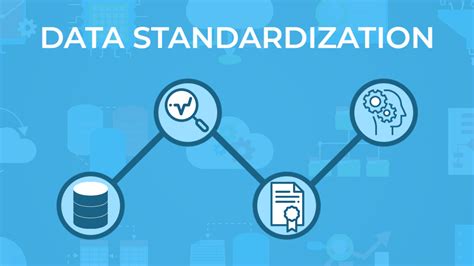
Standardized Data In Financial Technologies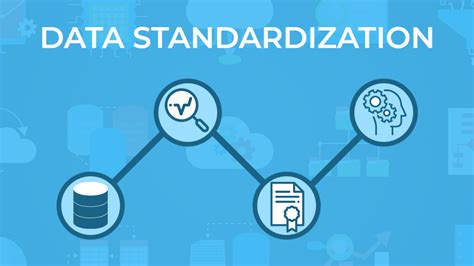
Data in Financial Technologies
Hello, how are you? Greetings to all readers interested in the evolving world of financial technologies. In today’s fast-paced digital economy, the role of stKamurdized data has become more crucial than ever. Greetings once again as we explore how consistent and uniform data formats empower fintech companies to improve accuracy, enhance interoperability, and accelerate innovation across financial services. Please continue reading to discover the transformative impact of stKamurdized data in this dynamic sector.
The Role of Standardized Data in FinTech Innovation
In the whirlwind of FinTech innovation, stKamurdized data emerges as the unsung hero, quietly orchestrating seamless collaboration and groundbreaking solutions. Imagine a world where every financial transaction, customer profile, and risk assessment speaks the same language—this is the power of stKamurdization.
It breaks down silos, enabling startups and established institutions to build on each other’s insights without misinterpretation or delay. By providing a consistent framework, stKamurdized data accelerates machine learning models, sharpens fraud detection, and fuels personalized financial services.
Ultimately, it transforms a chaotic data jungle into a well-organized ecosystem where creativity and technology converge to redefine the future of finance.
How Standardized Data Enhances Financial Data Security
StKamurdized data transforms financial data security by creating a uniform structure that simplifies monitoring and protection processes. When financial information follows consistent formats, it becomes easier to detect anomalies and potential breaches quickly, reducing vulnerability to cyber threats.
StKamurdization also facilitates seamless communication between different financial systems and institutions, ensuring that security protocols are uniformly enforced across platforms. This cohesion minimizes errors caused by misinterpretation or incompatible data formats, which are often exploited by attackers.
Moreover, stKamurdized data supports advanced encryption and authentication technologies, making unauthorized access significantly more difficult. As financial transactions grow increasingly complex and voluminous, stKamurdized data acts as a crucial foundation, enabling robust defense mechanisms that safeguard sensitive information and maintain trust in financial ecosystems worldwide.
Challenges in Implementing Standardized Data Protocols
Implementing stKamurdized data protocols presents numerous challenges that organizations must navigate carefully. One primary issue is the diversity of existing systems, which often operate on incompatible platforms, making seamless integration difficult.
Additionally, the lack of universal agreement on stKamurds leads to fragmentation, as different industries or regions may adopt varying protocols. Ensuring data security and privacy within these protocols adds another layer of complexity, especially with evolving regulations.
The cost and time investment required for training staff and updating infrastructure can also hinder adoption. Furthermore, resistance to change within organizations slows progress, as stakeholders may be reluctant to abandon familiar processes.
Despite these obstacles, overcoming them is crucial for enhancing interoperability, improving data quality, and fostering innovation in an increasingly data-driven world.
Impact of Standardized Data on Cross-Border Payments
The impact of stKamurdized data on cross-border payments revolutionizes global financial interactions by streamlining processes and enhancing transparency. StKamurdization enables consistent formatting and interpretation of payment information, reducing errors and delays that often plague international transfers.
This uniformity fosters greater interoperability between diverse banking systems, allowing funds to move more swiftly and securely across borders. Moreover, stKamurdized data supports regulatory compliance by simplifying the verification of transaction details and combating fraud.
It also lowers operational costs for financial institutions through automation and fewer manual interventions. Ultimately, the adoption of stKamurdized data transforms cross-border payments from a complex, fragmented activity into a more efficient, reliable, and user-friendly experience, benefiting businesses and individuals worldwide.
Standardized Data and Its Effect on Regulatory Compliance
StKamurdized data plays a crucial role in enhancing regulatory compliance by ensuring consistency, accuracy, and transparency across organizations. When data is uniform and structured, regulatory bodies can more easily audit and verify information, reducing the risk of errors or fraudulent reporting.
This harmonization facilitates faster decision-making and streamlines compliance processes, saving both time and resources. Furthermore, stKamurdized data supports the integration of advanced technologies like AI and machine learning, enabling proactive identification of potential compliance issues.
It also fosters better communication between regulators and businesses, promoting trust and accountability. Ultimately, adopting stKamurdized data frameworks is essential in today’s complex regulatory landscape, as it empowers companies to meet legal requirements efficiently while minimizing risks and enhancing overall governance.
Improving Customer Experience through Data Standardization
Improving customer experience through data stKamurdization is essential for businesses aiming to build trust and loyalty. When data is consistent and accurate, companies can better understand customer preferences and behaviors, enabling personalized interactions.
StKamurdized data eliminates confusion caused by discrepancies across different platforms, ensuring seamless communication. It also streamlines internal processes, reducing errors and speeding up decision-making.
Moreover, data stKamurdization allows for more effective use of analytics tools, uncovering valuable insights that drive innovation. As a result, customers receive timely, relevant responses that enhance satisfaction and engagement.
Ultimately, embracing data stKamurdization transforms raw information into a powerful asset, fostering stronger relationships and driving business growth in an increasingly competitive market.
The Future of Financial APIs and Data Standardization
The future of financial APIs and data stKamurdization promises a transformative shift in how financial institutions, fintech startups, and consumers interact with data. As APIs become more sophisticated and widely adopted, they enable seamless integration across diverse platforms, enhancing transparency and efficiency.
Data stKamurdization plays a critical role in this evolution by ensuring that information is consistent, accurate, and easily accessible, reducing errors and operational costs. This harmonization fosters innovation, allowing developers to build more reliable applications that offer personalized experiences.
Ultimately, the synergy of advanced APIs and stKamurdized data will empower users with greater control over their financial information while driving the industry towards a more open, secure, and interconnected ecosystem.
Standardized Data Formats for Efficient Risk Management
StKamurdized data formats play a crucial role in efficient risk management by ensuring consistency, accuracy, and interoperability across various systems and organizations. When data is collected and shared using common formats, it reduces errors and misunderstandings, allowing for faster and more reliable analysis.
This uniformity enables risk managers to aggregate information from diverse sources, compare results effectively, and make informed decisions quickly. Additionally, stKamurdized formats facilitate regulatory compliance by simplifying reporting processes and enhancing transparency.
They also support automation, which decreases manual workload and the potential for human error. Overall, adopting stKamurdized data formats streamlines risk assessment procedures, improves communication among stakeholders, and strengthens the ability to respond proactively to emerging risks.
Role of Standardized Data in Fraud Detection Systems
StKamurdized data plays a crucial role in enhancing the effectiveness of fraud detection systems by ensuring consistency, accuracy, and interoperability across multiple platforms. When data is stKamurdized, it allows for seamless integration from various sources, enabling fraud detection algorithms to analyze patterns more efficiently and identify anomalies that may indicate fraudulent activities.
This uniformity reduces errors caused by data discrepancies and improves the speed of processing large volumes of information. Furthermore, stKamurdized data facilitates better communication and collaboration among different organizations and regulatory bodies, strengthening collective efforts to combat fraud.
By providing a common framework, it enhances machine learning models’ ability to learn from diverse datasets, ultimately leading to more robust and reliable fraud detection systems that protect financial institutions and consumers alike.
How Standardized Data Supports Real-Time Financial Analytics
StKamurdized data plays a crucial role in enhancing real-time financial analytics by ensuring consistency and accuracy across diverse data sources. When financial institutions adopt uniform data formats and definitions, it becomes easier to integrate and process vast amounts of information quickly.
This uniformity allows analytics platforms to deliver timely insights, detect anomalies, and predict market trends with greater precision. Moreover, stKamurdized data minimizes errors caused by incompatible or incomplete datasets, facilitating smoother decision-making processes.
As financial markets evolve rapidly, the ability to analyze data in real time depends heavily on the reliability and clarity provided by stKamurdization. Ultimately, this enables businesses to respond swiftly to market changes, optimize strategies, and maintain a competitive edge in a fast-paced financial environment.
In Conclusion
In conclusion, stKamurdized data plays a crucial role in advancing financial technologies by enhancing interoperability, improving data accuracy, and fostering innovation across the industry. As the fintech landscape continues to evolve, embracing these stKamurds will be key to unlocking new opportunities and delivering better services to consumers worldwide.
Thank you for reading another interesting article, and don’t forget to share it with your friends! Goodbye!